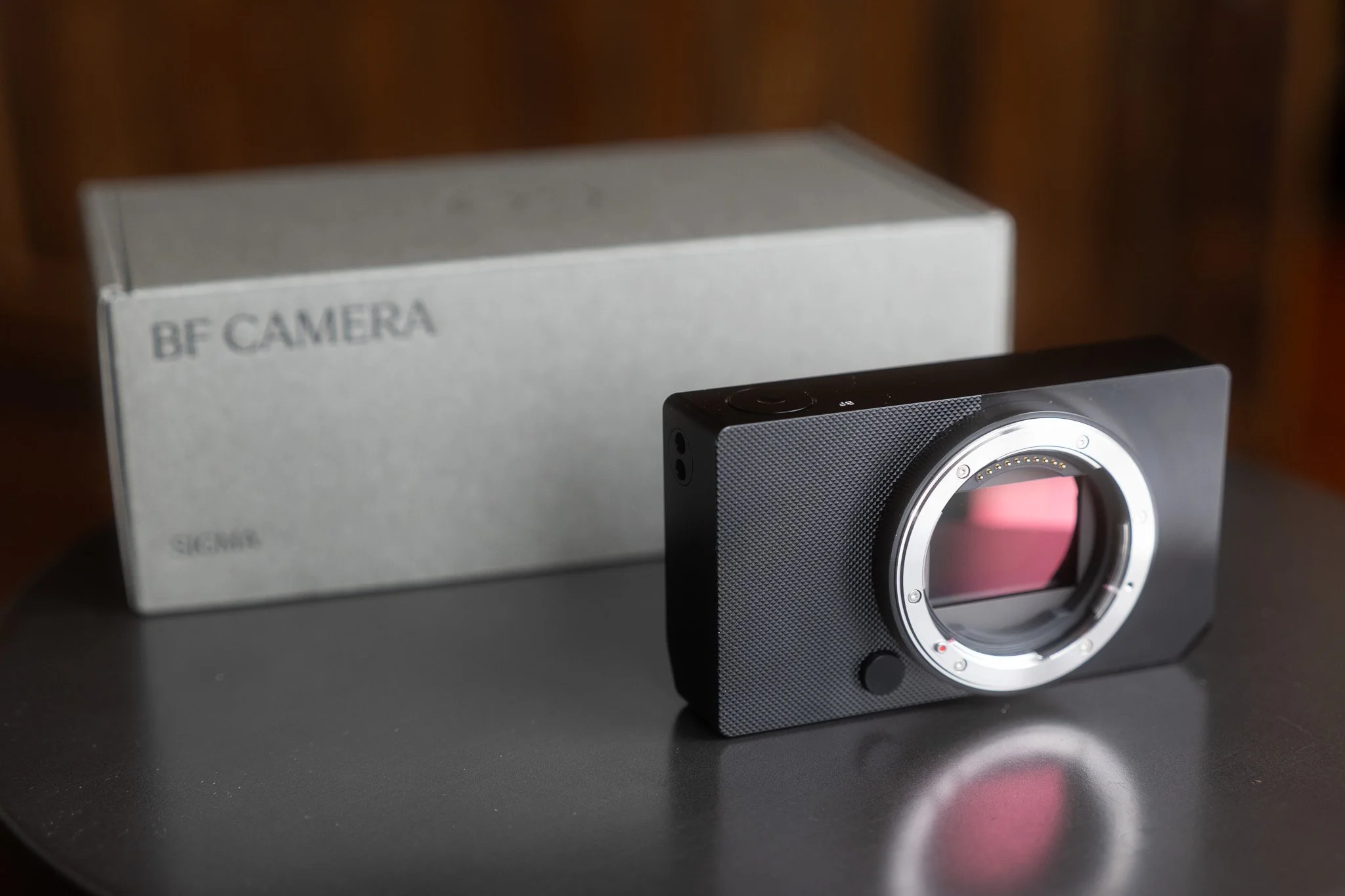
I Actually Bought One
There was a lot of hype around the Sigma BF camera when it first came out, which unfortunately left the internet with a bunch of sponsored “reviews”, “reviews” from people who borrowed the camera from Sigma, and “reviews” from people who had professional ties to Sigma. A few months after launch, those “reviews” (which all regurgitated the same things) started to dwindle, but very few genuine owner reviews emerged. Its really hard to find pros and cons from people who actually put down their own cash to buy this camera.
This void motivated me to write this article. I intend to write and unbiased review of the Sigma BF as someone who actually swiped his debit card to buy this hunk of aluminum.
Personal Buying Experience
When I saw Sigma announce a new camera earlier this year, I was really excited, but after learning more about the Sigma BF, I wrote it off as a functionally less capable Sigma FP with a facelift. I wrote about my initial impressions in my article, “Skip the Sigma BF and Buy the Sigma FP or FP L.” After seeing the retail price of $2200 USD, I put it out of my mind entirely.
But several months later, I ran across a listing for a Sigma BF on eBay. The seller had a basically brand new BF, with the Sigma 50mm f2 DG DN lens, and a Tilta cage for $2200. The price was pretty good, but being the cheapskate that I am, I offered him $2000 on a longshot. To my surprise, he accepted and I became the owner of a BF.
Key Sigma BF specs:
25 MP Full Frame Sensor
Aluminum Body
Phase Detect Autofocus (SO much better than the Sigma FP)
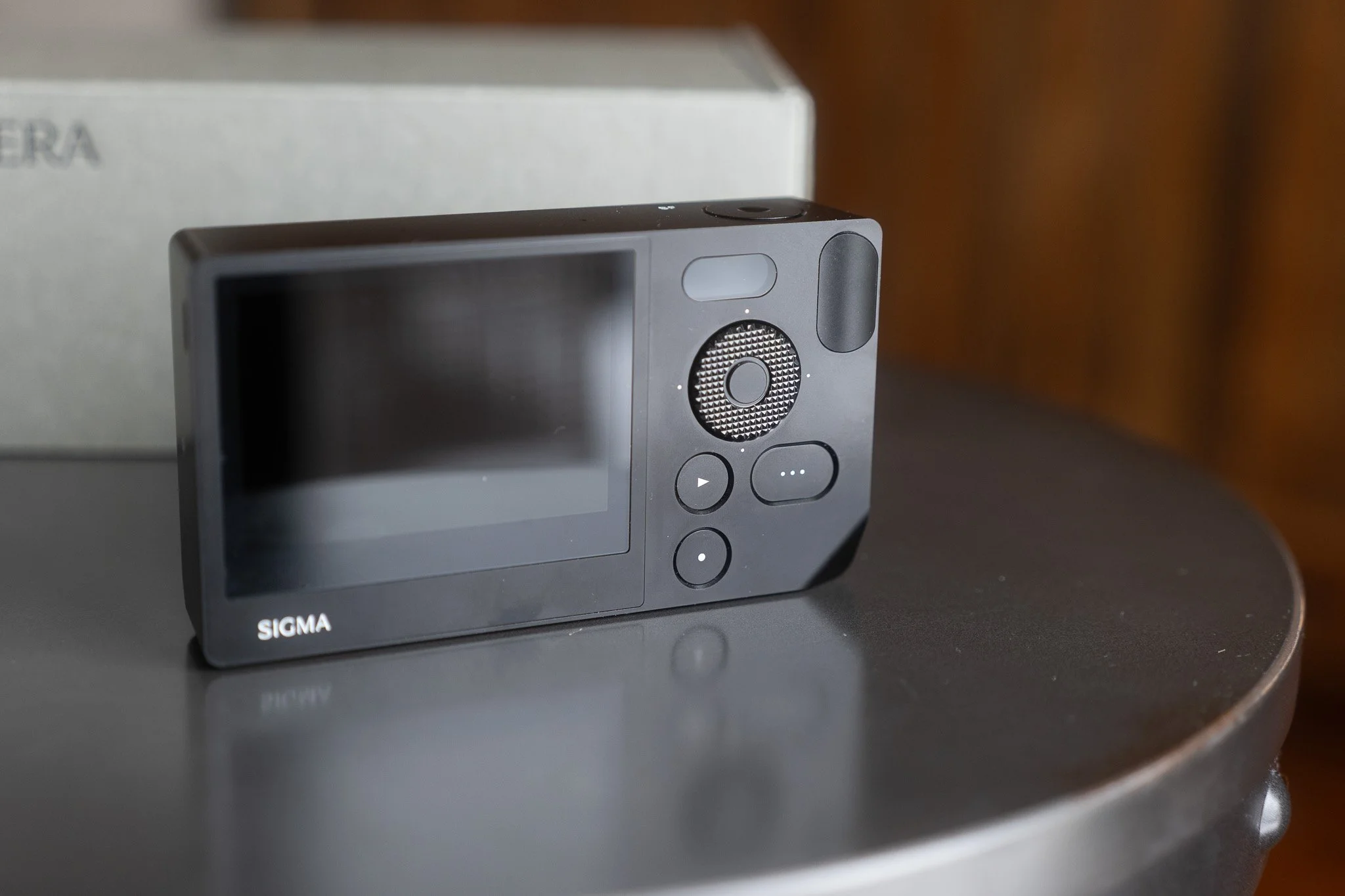
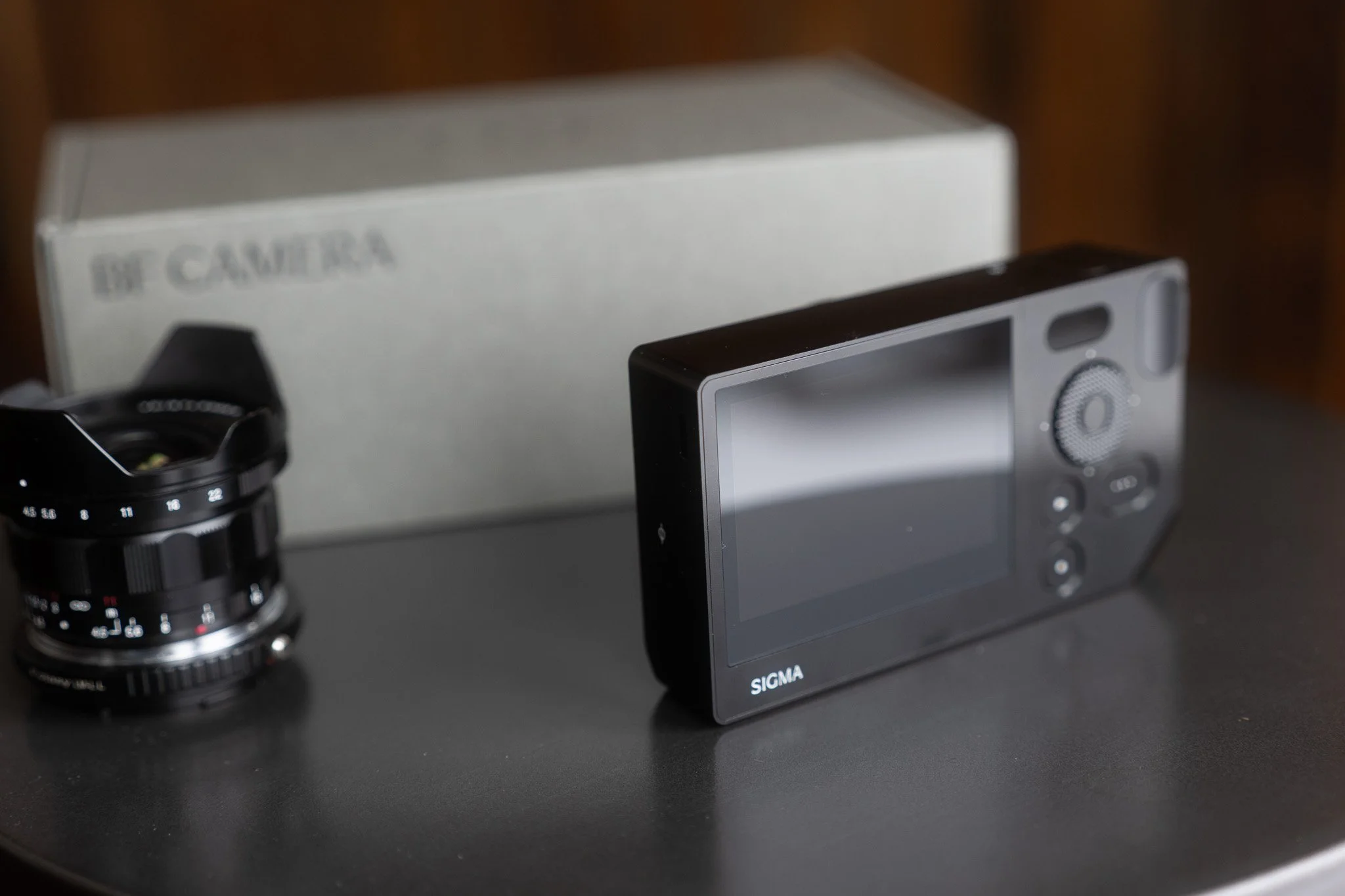
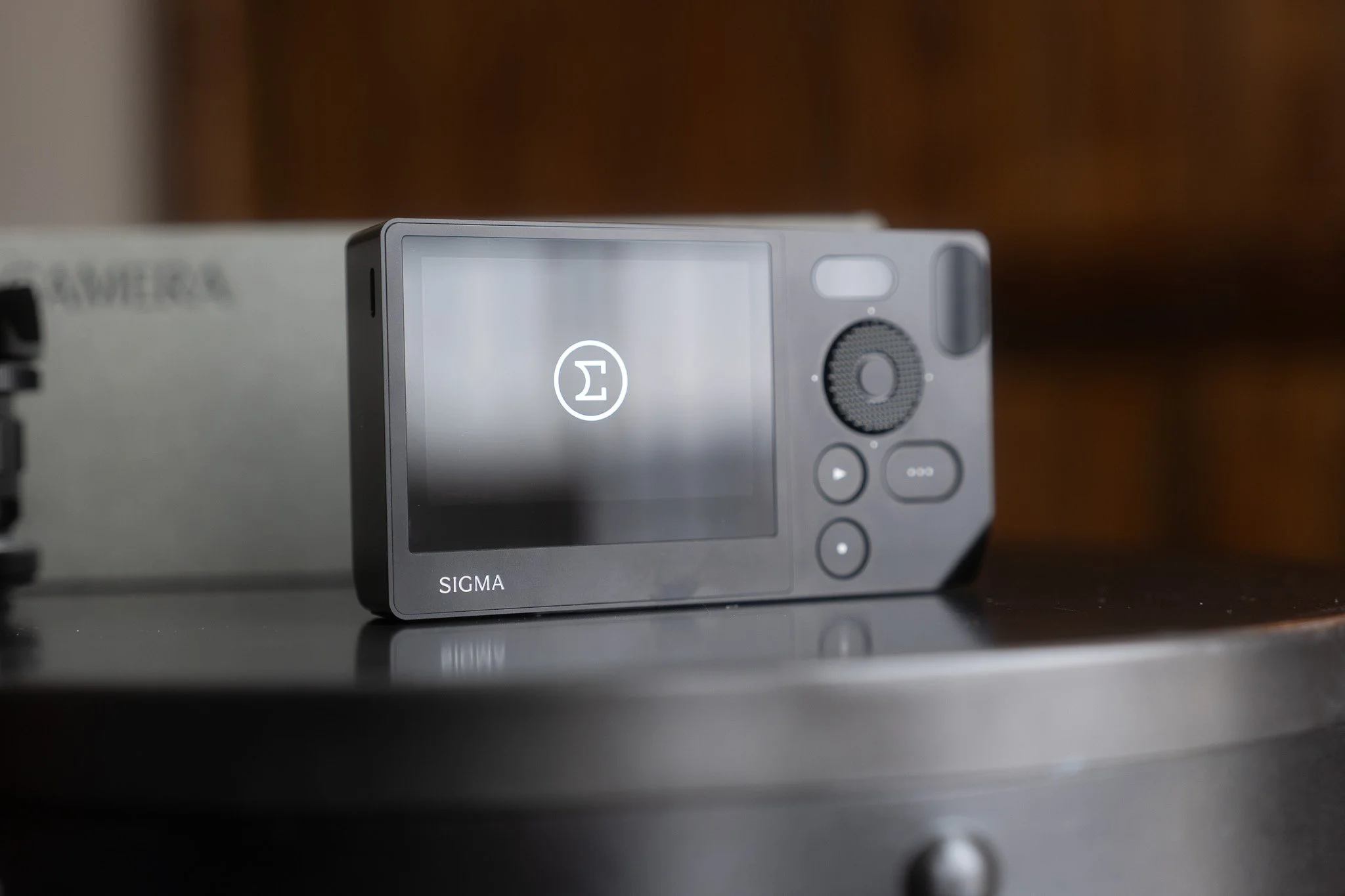
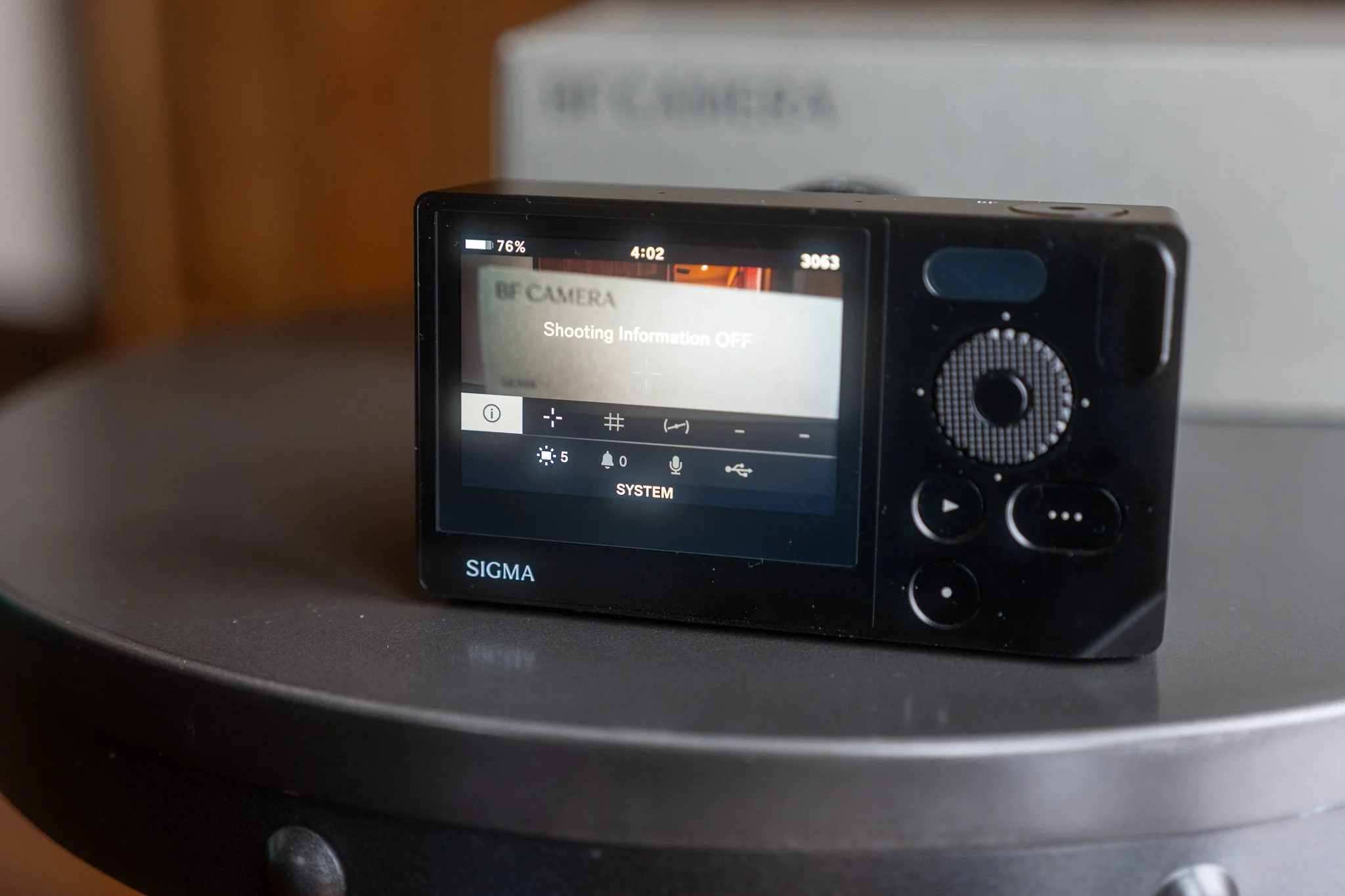
Fixed 3.2-Inch, 2,100,000 Dot Touchscreen (no rotation or tilt)
Electronic Shutter Only (no Mechanical Shutter)
Electronic Image Stabilization Only (no Sensor Stabilization)
Capable of 6k video
8 Frames Per Second
446g with Battery
Max 25,600 ISO
230 GB of Internal Memory (no SD card slot)
One USB-C Port (no other ports)
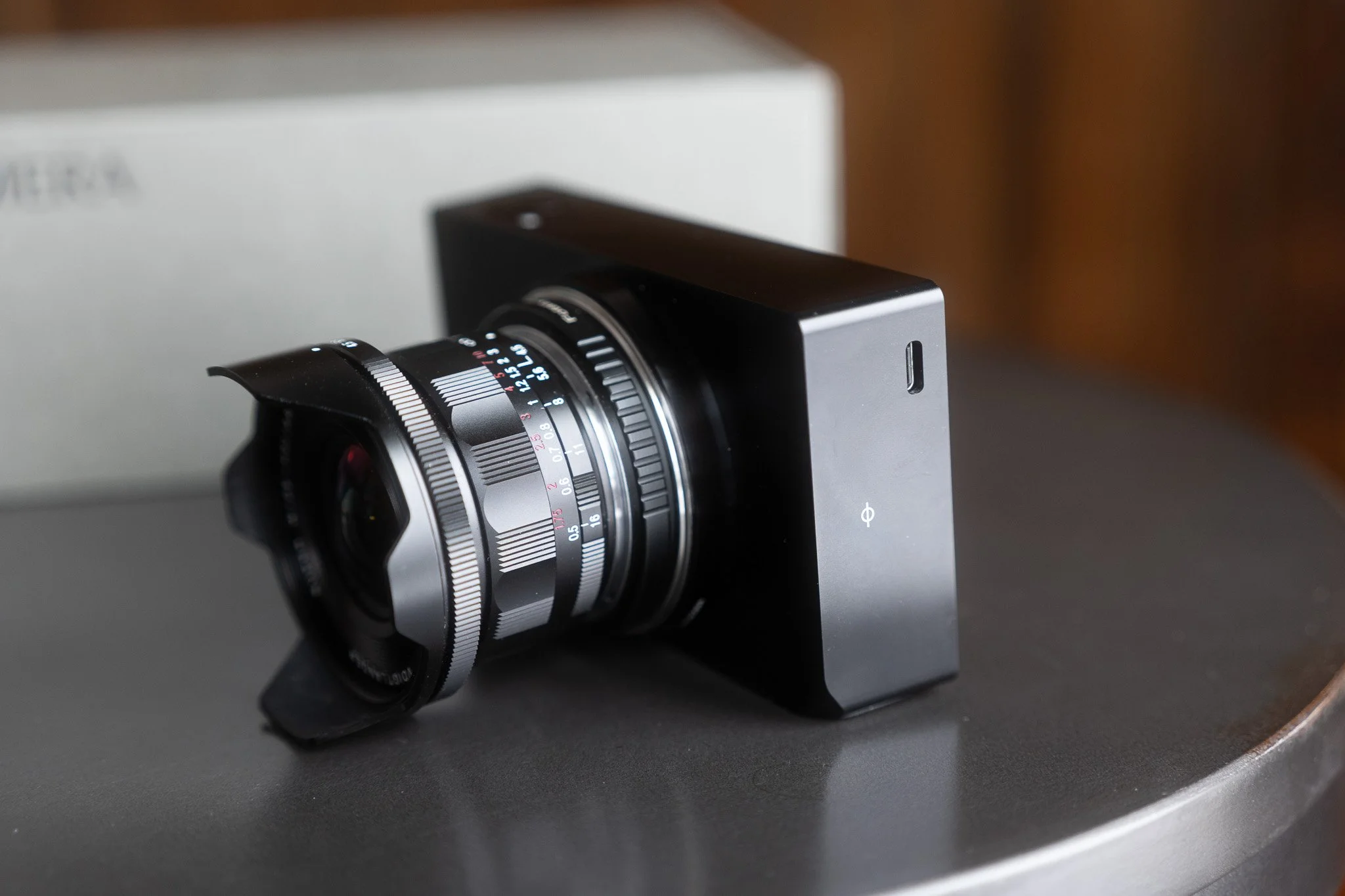
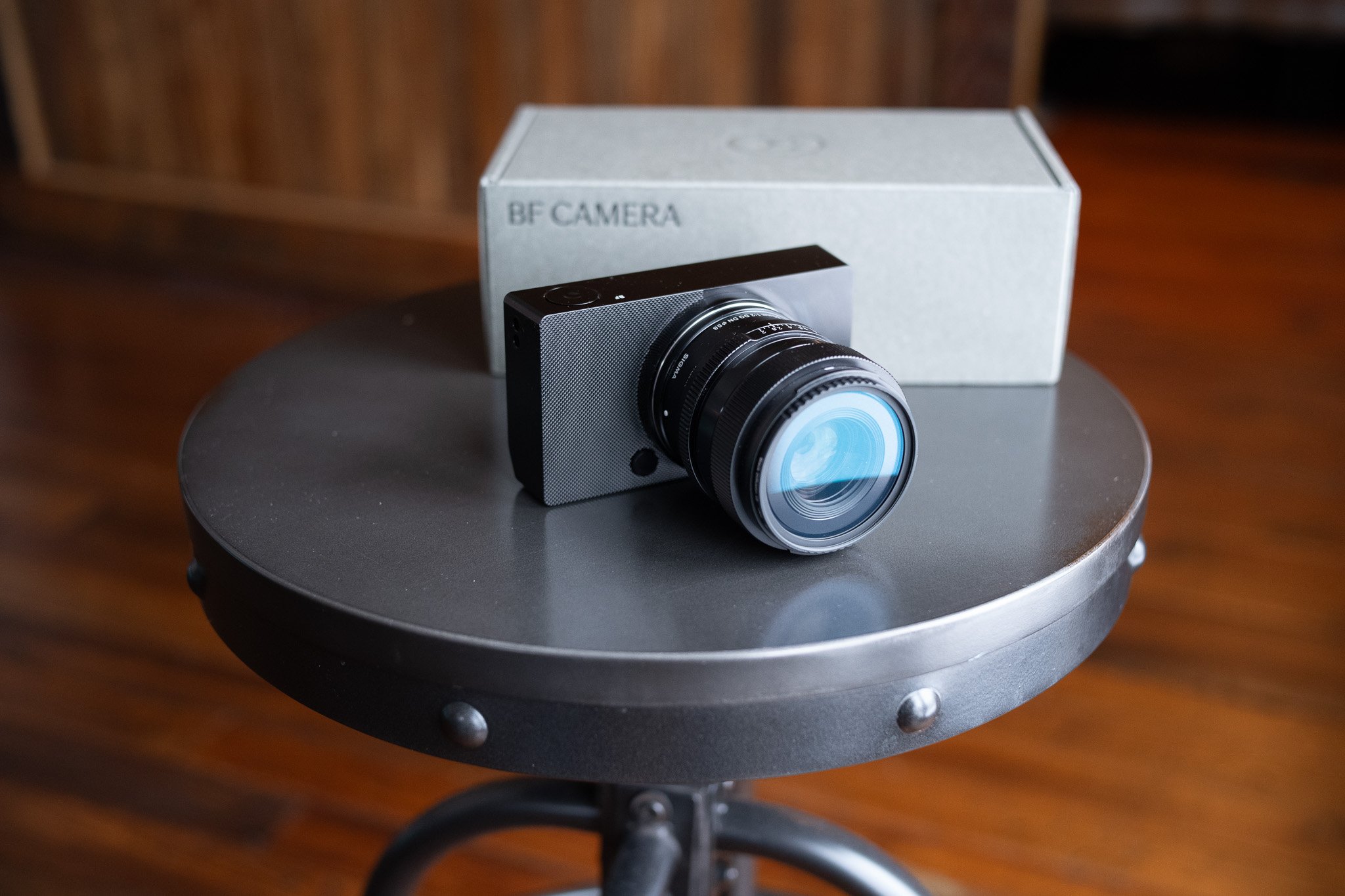
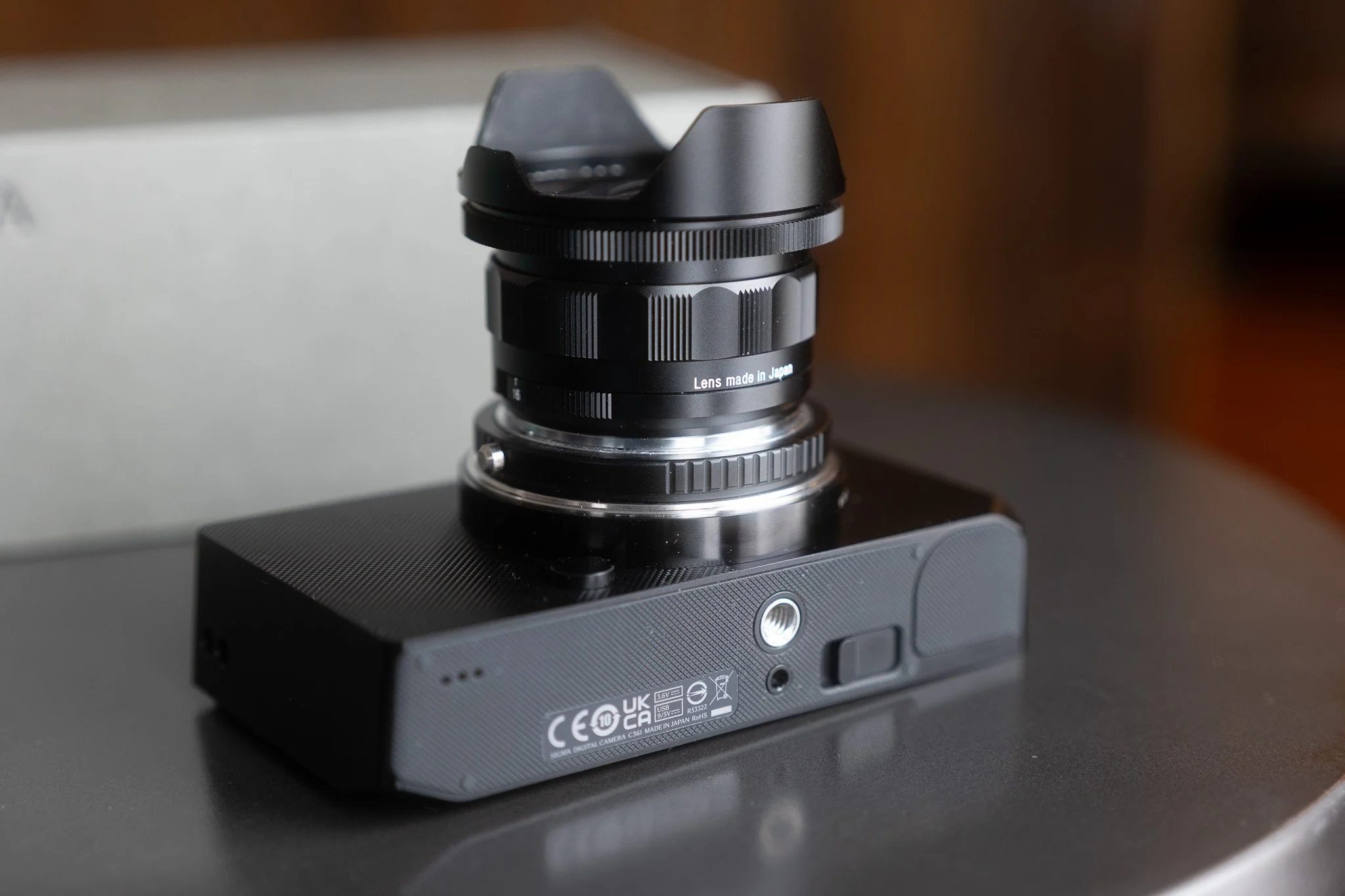
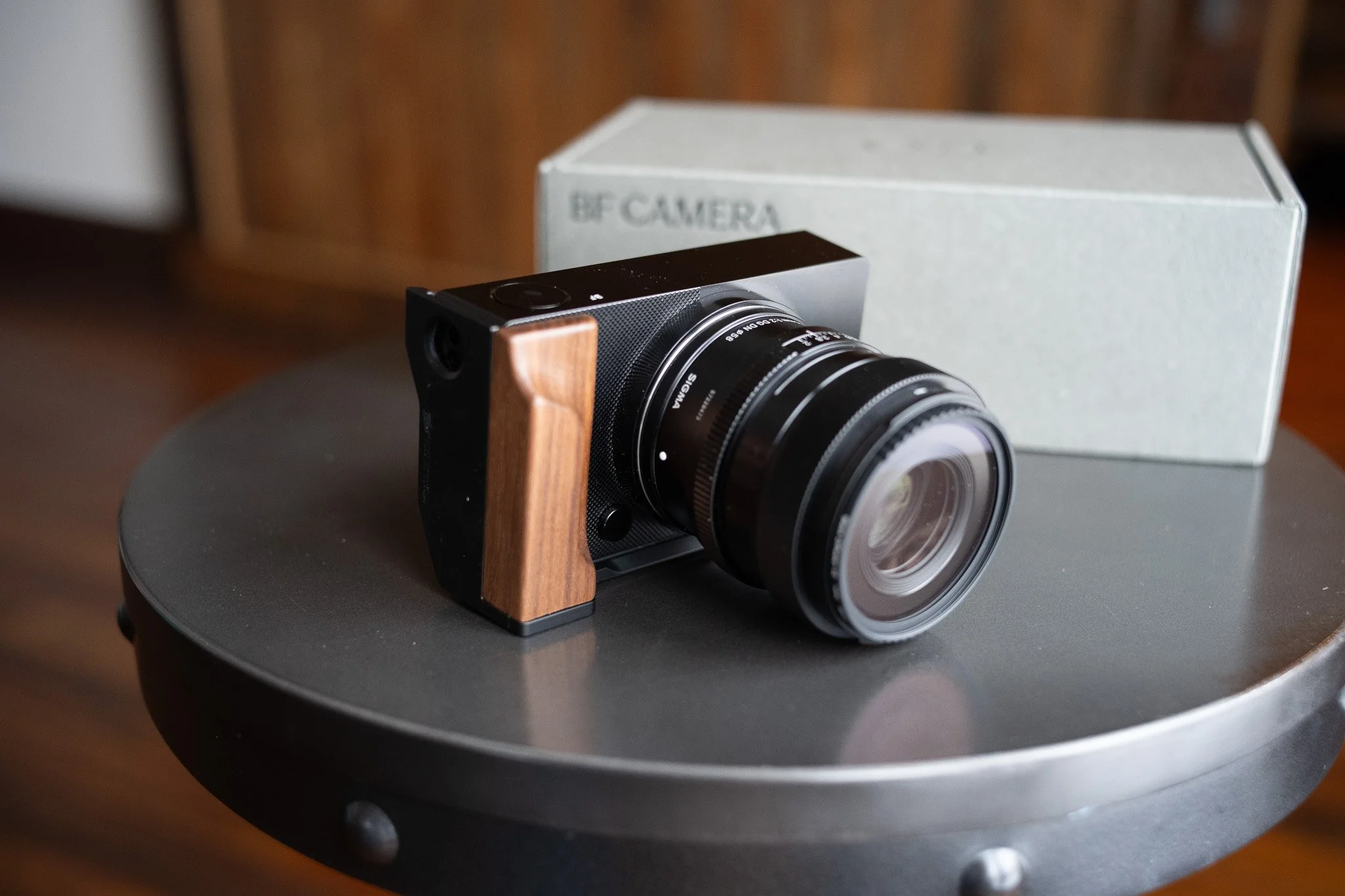
My Sigma BF Set-Up
My most used setups for the Sigma BF include:




A Camera with Better Build Quality Doesn’t Exist
I thought about comparing this camera to Leica, because their German build quality has been the gold standard for years, but Leica has lost a lot of its luster. They aren’t innovative, they aren’t advancing, and Japan is beginning to outperform them.
It is my opinion that the Sigma BF is the best built modern camera, full-stop. There are no competitors, no comparisons, and no debates. Aizu, Japan (the location of Sigma’s factory) has built the highest quality camera in the world.
The aluminum body is smooth like ice, and your fingers feel the durability when they touch the cold metal. No leatherette to peal off after years of use, the metal body is simple but enduring.
The buttons are perfect, with no play or mushiness. An interesting feature about the Sigma BF is that it uses several haptic buttons on the back. The buttons only feel like buttons when the camera is powered on. When the power is off, the buttons feel like flat surfaces. This technology has been used on smartphones for years. I’m not sure why Sigma opted for haptic buttons, but they certainly feel refined, matching the rest of the body.



Battery Life, Is it as Bad as They Say?
One of the criticisms mentioned in almost every Sigma BF “review” online is that the battery life is very poor. The CIPA rating on this camera is something like 260 shots, but those numbers don’t always mean much in the real world.
Whether the battery life is sufficient is really going to depend on your shooting style. For me, I’ve almost never encountered a camera the didn’t provide sufficient battery because I’m a contemplative photographer who turns the camera off between photos. A very heavy day of shooting for me is taking 300 photos (usually on vacation). I rarely use tracking autofocus, I rarely shoot burst, and I only take short videos every now-and-again. If your shooting style is similar to mine, I don’t think battery life will be a concern.
The other day, I charged the battery to 100% and put it to the test. I photographed in 2 outdoor locations (temperatures below 32 F (0 C)) for several hours. After a firmware update, 300 photos, and several minutes of 4k video recording, I had 30% battery left.
I was rather impressed after hearing all the “reviewers” saying the camera had atrocious battery life. I don’t know if Sigma improved the battery performance through firmware, or if the “reviewers” were being dramatic. Let’s be honest, most of them probably didn’t even use the camera long enough to exhaust an entire battery.



Unfortunately, Not a One Handed Camera
I love it when a camera can be operated with one hand. This is even more important to me now that I have a baby, and often find myself with only one free hand.
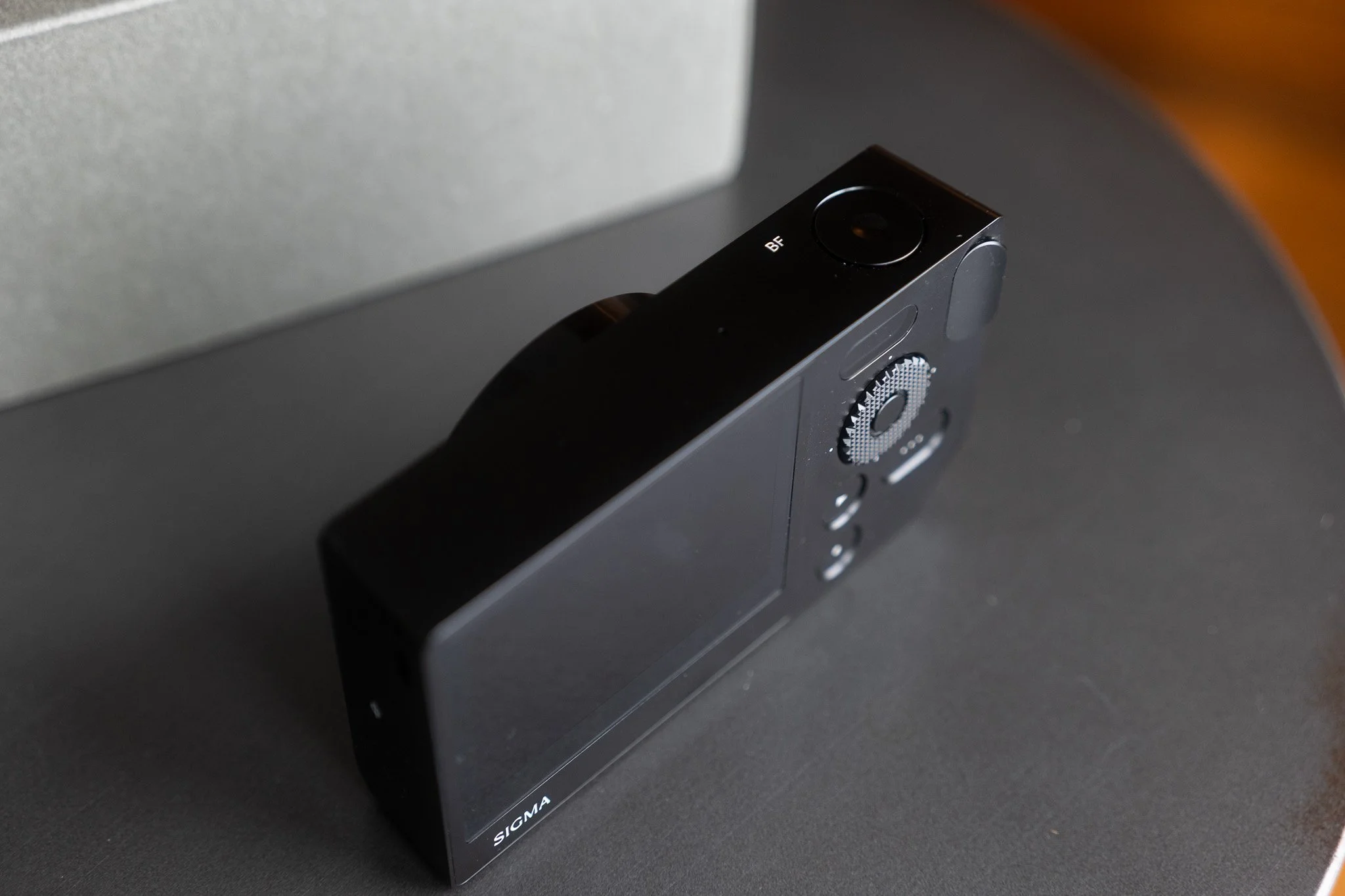
The Sigma BF can be operated with one hand if you’re willing to do some finger gymnastics. The power button was unfortunately placed at the bottom of the back screen, which makes it hard to press single-handed because of the location + the weight of the camera. It can be done, but it often requires some precarious balancing of the camera, and pressing your fingers up against the protruding lens.
I really wish Sigma had put the power button on top, next to the shutter button (like the Ricoh GR III). This would have made one-handed operation much easier.


What do I Think About the Internal Storage?
To me, the internal storage and lack of an SD card slot is neither a pro or a con. It has its advantages and disadvantages.
It’s nice that I never forget my memory card and that the storage is super fast when offloading images to my computer.
On the other hand, I prefer the ease of popping an SD card out of the camera and inserting it into my computer to having to have a USB-C cable on hand every time I want to move files to my computer.
I do wish Sigma would develop an app for this camera to allow for files to be transferred wirelessly, but I doubt we’ll see it. If they were going to do it, they would have done for the Sigma FP and FP L.
The Menu and Minimalism
Sigma redesigned the Sigma BF’s menu system to be unique to the camera. In my experience, there is nothing else like it on the market. Sigma really tried to simplify the menus as much as possible. In some ways they succeeded, but in other ways they redesigned the wheel for no purpose.
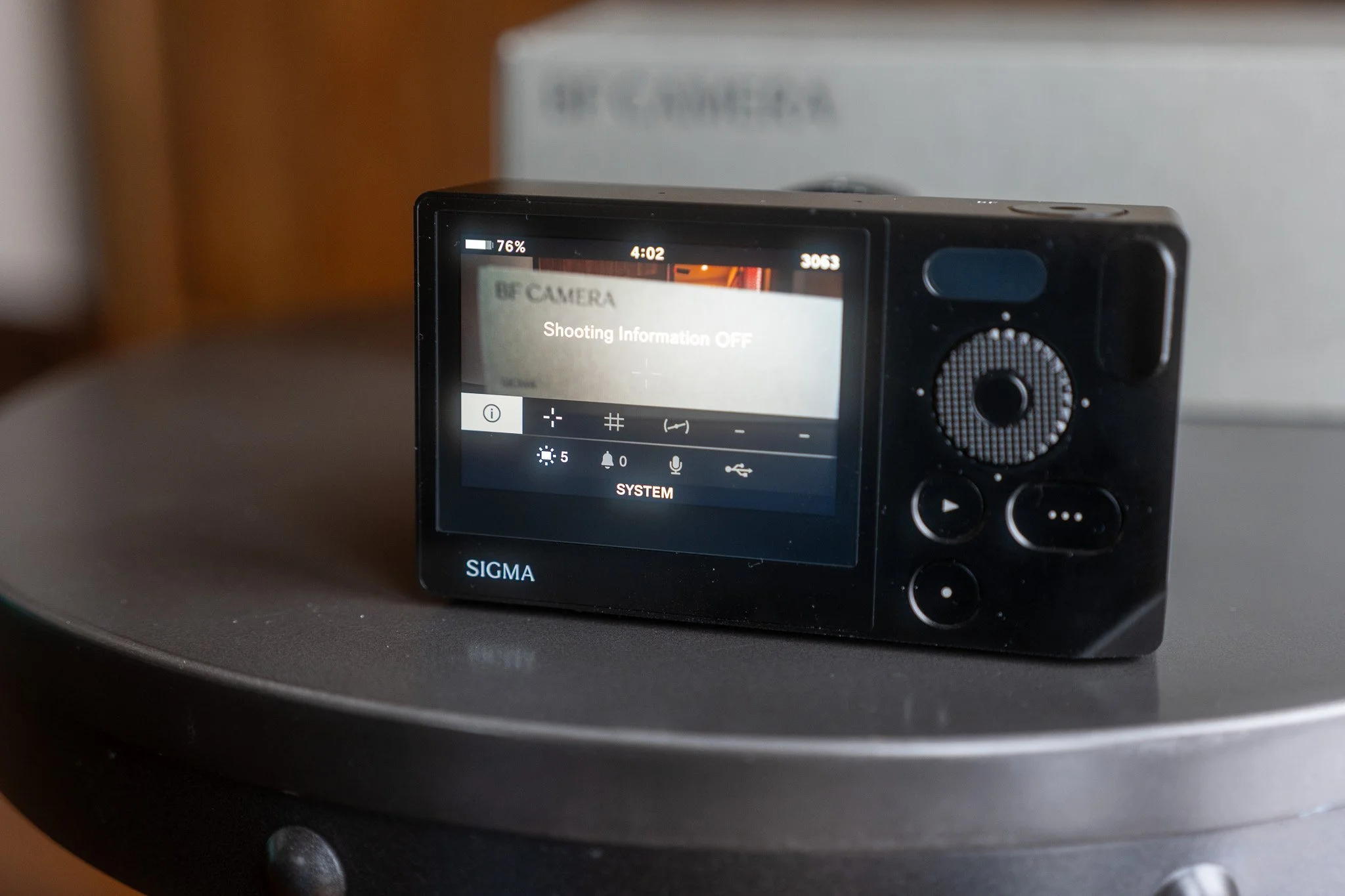
You won’t find yourself lost in menus, sub-menus, and sub-sub-menus like most modern cameras. The menus on the BF are as “shallow” as possible. That is both a blessing and a curse. settings are easy to find, but the customizability of the camera is very limited. As someone who doesn’t typically customize my cameras heavily, this doesn’t bother me much, but for those who are in the habit of mapping function buttons to their taste, you may find the BF frustrating.
In a way, Sigma created a more pleasant minimal menu experience, but the lack of customization means you’ll be diving into the menu on the back screen more often than on other cameras that allow you to make changes with the flip of a switch or the press of a customized button.
Sigma’s new menu is not “intuitive,” no matter what Sigma’s UK YouTube channel claims (I love that channel by the way, they make some beautiful content). This was the only camera in the last 5 years that forced me to read the manual to use it properly. There is a learning curve, but like all menus, you get used to it after a few hours of photography.
Overall, I commend Sigma for trying something new, but I don’t really think the menu enhances the experience. I actually wish Sigma had just brought over the menu system from the Sigma FP. I found that menu to be very minimal, clean, and intuitive.
Image Quality
We’ve come to the point in mirrorless camera technology where any modern sensor in any modern camera will be capable of making nice images. The Sigma BF is no exception. The sensor is as good, if not slightly better, than other 24MP sensor’s I’ve used. It’s thought that this same sensor appears in Panasonic’s Lumix S9.
That said, I do want to discuss 2 topics about image quality, (1) dynamic range and (2) color science.
Dynamic Range
Some have suggested that due the lack of a mechanical shutter on the Sigma BF, it will have poorer dynamic range than other cameras. Let’s test the dynamic range with some highlight and shadow tests.

-4 Stops Underexposed

-3 Stops Underexposed

Recovered in Lightroom

Recovered in Lightroom
As with most cameras, recovering shadow detail is not a problem. There is some noticeable green tint in the shadows of the most badly underexposed image, but plenty of detail is still present.

+4 Stops Overexposed

+3 Stops Underexposed

Recovered in Lightroom

Recovered in Lightroom
Holy smokes! I thought for sure the highlights of these images would be totally lost when I pulled down the exposure slider but apparently not! Even the +4 stop overexposed image retained details in the snow.
I am really impressed with the flexibility and durability of the Sigma BF’s DNG files and its sensor.
I generally advise people to protect the highlights in high dynamic range situations, but in this case, it hardly seems to matter. Good job Sigma!
Color Science
Most mainstream influencers and reviewers are quick to say Fujifilm cameras have the best out-of-camera colors, but I would disagree. In my experience (and of course color is subjective) I put Fujifilm in 3rd place, Lumix in 2nd, and Sigma in 1st.
I suspect the reason no one talks about Sigma colors is because so few people use Sigma cameras on a daily basis.
The following image are straight-out-of-camera raw files (DNG). These were taken in direct sunlight around 12pm (no golden hour advantage here). I think they look wonderful. You judge for yourself.







Autofocus
If you used the Sigma FP, you know the autofocus was laughable, it was essentially a manual focus camera.
The Sigma BF is a different story. While not class-leading, the autofocus has been dramatically improved. It’s faster and more accurate in single focus, and can even reliably handle basic tracking scenes. Face detection works consistently.
I would compare it to Panasonic’s old contrast-detect-autofocus featured on cameras like the S1 and GH6. It won’t blow your mind, but it’s easily Sigma’s best autofocusing camera to date.
Low Light Performance and High ISO Capabilities
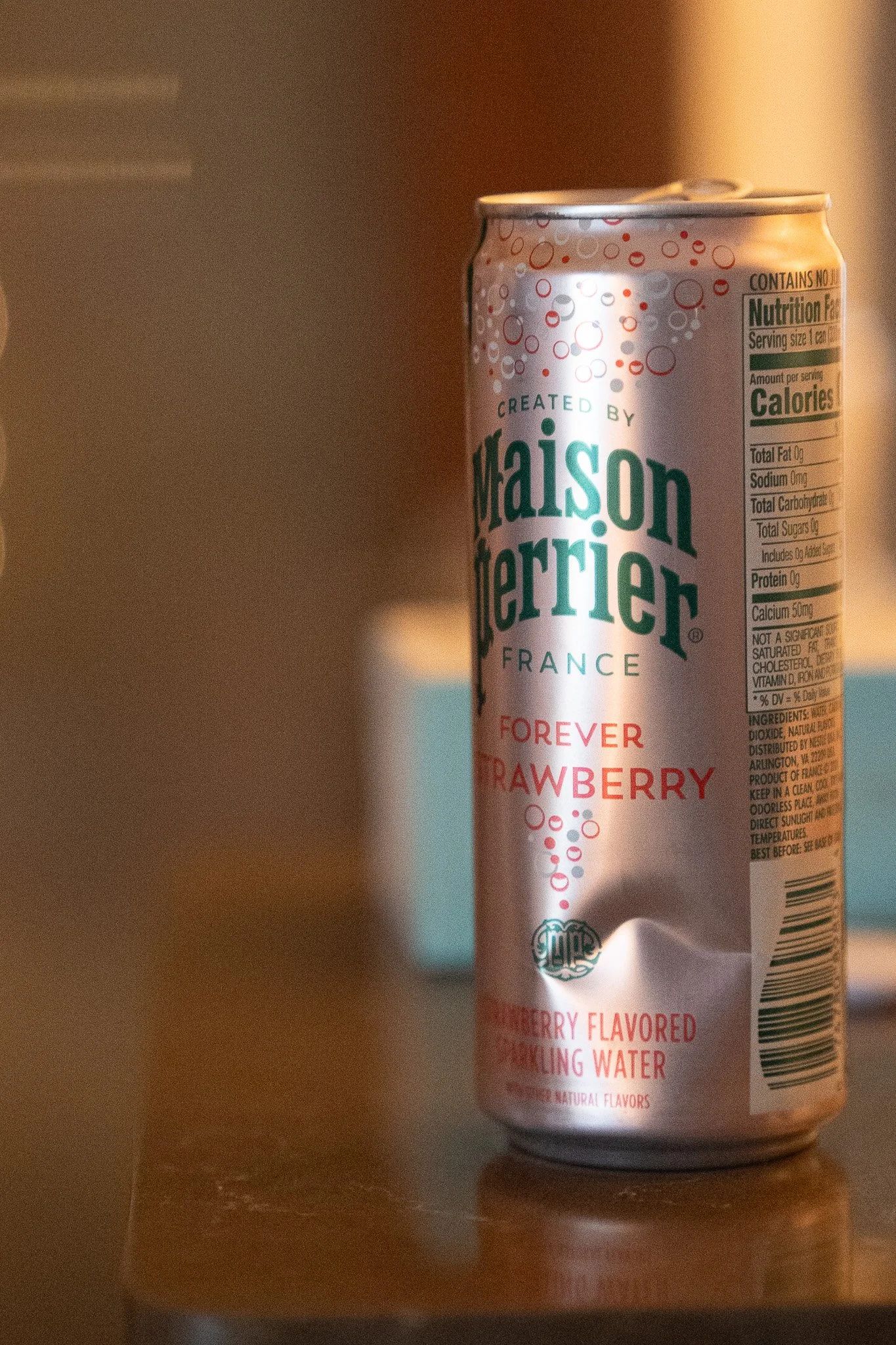
I took the Sigma BF to my local Christmas tree lighting, and I was very impressed with how it performed. Not having IBIS, I had to crank the ISO up a bit more than usual, but the camera performed admirably. I really like they way the high-ISO files were processed. I wouldn’t hesitate to take this camera out at night again.
The good high-ISO performance has made me miss IBIS less.
*I did not apply post-processing noise reduction to any of the images below.

ISO 1000

ISO 1600

ISO 6400

ISO 10,000

ISO 8000

ISO 1600

ISO 6400

ISO 1000

ISO 5000

ISO 6400

ISO 12800
ISO 12800
Video
It is widely thought that the Sigma BF shares a sensor with the Lumix S9, and that sensor is known for producing great video quality. The Sigma BF does indeed output beautiful video (all the way up to 6k), but it’s not so much the sensor as the hardware that keeps this camera from shining in the video department.
First, there is no image stabilization in the body, so your videos will be shaky if you don’t use a tripod (electronic stabilization isn’t comparable to IBIS).
Second, the screen on the BF doesn’t rotate or flip, so you’ll need a monitor.
Third, the ports are limited to 1 USB-C, so plugging in a monitor, power cable, and microphone for a video rig is a bit of a hassle and requires special dongles.
Fourth, the autofocus on a camera like the Lumix S9 is way more reliable than that of the Sigma BF.
I can think of about 20 cameras that I would recommend for video over the BF.
At the end of the day, you can get great video from the BF, but you’ll have to work harder and pay more than if you bought the Panasonic S9 or the S5 ii. Serious video shooters should look elsewhere.
Below, I’ve included some video samples taken with my BF using the Sigma 50mm f2 DG DN lens. These are 4k 30fps using the RICH color profile with electronic image stabilization employed.
The 4k is detailed and the colors are nice. Unfortunately, you probably noticed the jitter from the stabilization system. The electronic stabilization just isn’t effective enough to create a natural looking stabilized shot. You can fix the jitter using post-process stabilization software, but its another step in the workflow. Personally, I’m not going to use the electronic stabilization in the future, especially considering it requires a 1.25x crop, I’m going to shoot without stabilization and fix in post.
Video Autofocus
While not competitive with the leading camera brands, the video autofocus is vastly improved on the Sigma BF compared to the Sigma FP. It is mostly confident, although you will notice in drifting a few times in the sample video.
I wouldn’t use it to track moving subjects, but it’s sufficient for basic generally static video autofocus needs.
The Sigma BF’s Inexcusable Flaw
I can understand why Sigma chose to limit the BF in certain ways, but one thing I cannot forgive Sigma for is the low screen brightness on the BF. If you are going to make an camera without a viewfinder, the back screen cannot fail the user when a bit of sun hits it, yet this is exactly the problem with Sigma’s BF.
The back screen is often not bright enough to compose when the user is outside in sunlight. It definitely isn’t bright enough to obtain critical focus using manual focus lenses (which I loved doing on my Sigma FP).
The only explanation I can think of for this reality is an engineering blunder on Sigma’s part. Either they ran into problems with battery life or overheating, perhaps both, so they limited the screens light output.
Wow! What a misstep!



Is the Electronic Shutter Actually a Problem
Yes, its true that under certain artificial lighting conditions an electronic shutter will produce banding or streaking that can ruin images. Is this a deal breaker for electronic shutter only cameras like the BF?
In my opinion, no! I’ve shot extensively with the Sigma BF and FP and I’ve encountered very few occurrences of banding. I do not believe this will be a problem for most users, especially if you photograph outside or with primarily natural light.
If you’re a studio photographer or do a lot of work under artificial lights, this might be more of a concern. That said, I’ve taken countless photos indoors with overhead lighting, and I’ve not encountered the problem more than a handful of times.
Get a Grip, Trust Me
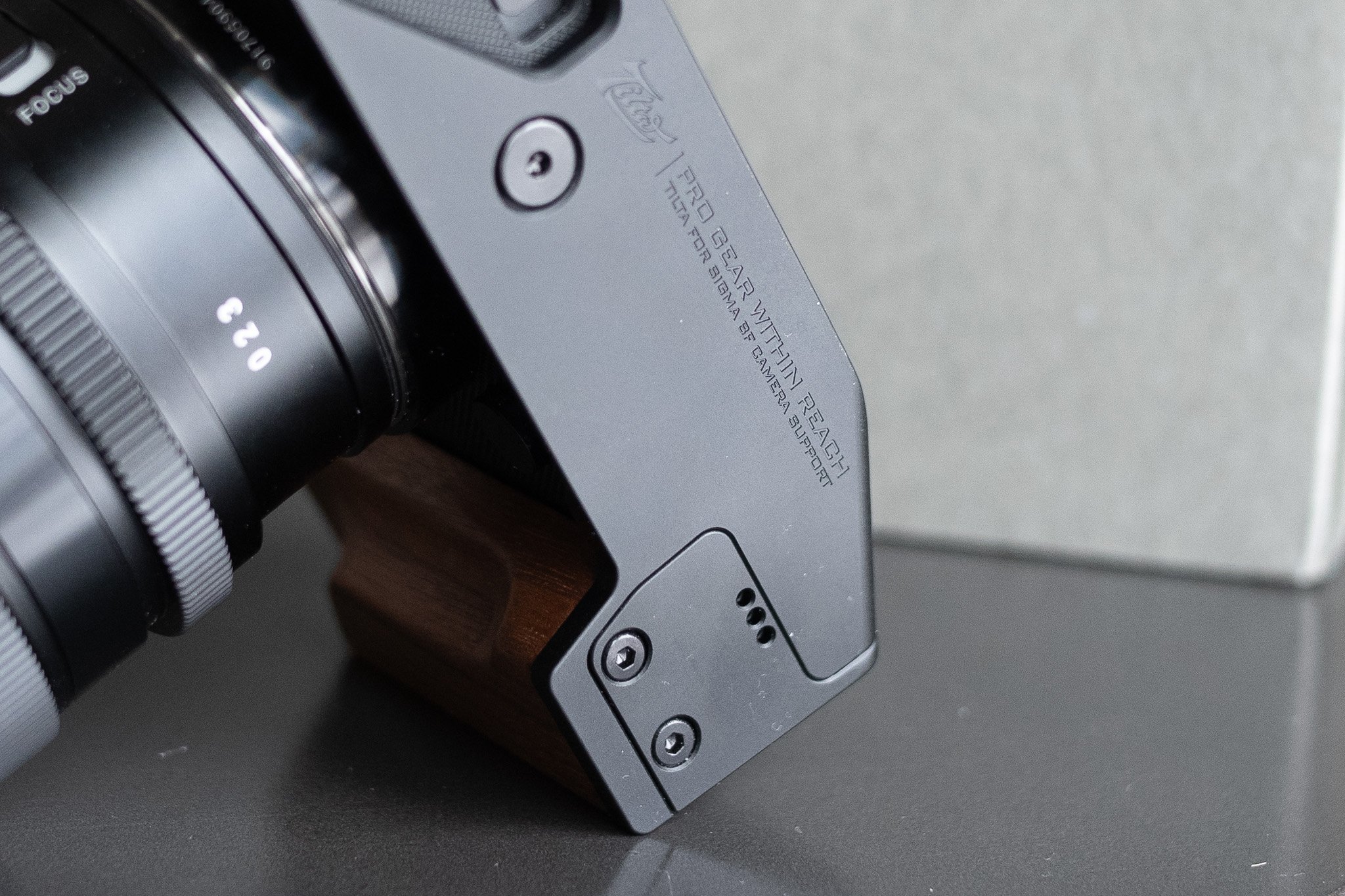
If you want to use your BF on a regular basis, I would highly recommend getting a grip or small cage for the camera. Luckily, several third party companies have created grips that compliment the cameras lines. I bought my camera with a Tilta Vintage camera cage. It looks sharp and adds the necessary ergonomics for consistent shooting.
One of the biggest advantages to adding a grip is that some of them add a second mounting hole. Many have complained that the Sigma BF only has one mounting hold, prohibiting it from being used on a strap. Several grips are designed with a built in second hole, which is compelling if you want to open up carrying options. I’ve listed a few options below:
Features I Miss Most When Using the Sigma BF
After using the Ricoh GR III for years, I’m content shooting without an EVF. The feature I miss the most on the BF is IBIS (In body image stabilization). The video would be so much more enjoyable to use on this camera if IBIS was present. I hate jittery footage that has to be stabilized in post. IBIS is also great for stabilizing photos taken with longer shutter speeds.
The Ricoh GR IV and the Panasonic Lumix S9 prove its possible to put IBIS into a camera the size of the BF. I wish Sigma had borrowed some tech from Lumix and added it. On the other hand, the Sigma BF may benefit from the lack of IBIS in the years to come. IBIS requires the sensor to move inside the camera body. Having less moving parts might mean greater longevity and fewer trips to the repair shop.
The other “feature” I miss the most with the Sigma BF is the lack of any small premium lenses for the L-Mount system. Sure, there is the Sigma 45mm f2.8 (a great lens) and the Sigma 24mm f3.5, but the BF really needs some lenses that complement its premium build and size. We need some pancake style lenses for the L-Mount. The community has been asking for these for years, but so far, the only really compact lenses are cheap plastic-fantastic offerings from Panasonic.
In an interview with PetaPixel (see minute 42), Sigma’s CEO confirmed that Sigma was working on making lenses to complement the BF, but that was months ago, and I’ve heard no update since. It would have been awesome if the BF had launched with a compact 28mm or 35mm lens. I wouldn’t even care if the lens was an f3.5 or f4 as long as it was small and match the BF’s beautiful design.
Right now, the Sigma i-series lenses are your best bet for the Sigma BF. They are fantastic lenses. I own the 50mm and the 65mm.
Sigma 24mm f/3.5 DG DN (the most compact)
Sigma 45mm f/2.8 DG DN (the second most compact)
Recommendation and Conclusions
Would I recommend the Sigma BF to another photographer? Yes! Yes I would. I ended up liking the Sigma BF much more than I thought I would when I initially read the spec sheet and press release. Getting the camera in my hands, feeling the build quality, and realizing that the reviewers were wrong about many things changed my mind.
I would recommend this camera to someone like me, someone who likes unique photography equipment, someone who wants something different. This is for someone who appreciates a slightly different shooting experience. If you want convenience and the latest features, look elsewhere. If you want a one of a kind camera, the Sigma BF might be for you.
Additional Reading
Sony Rx100 mark i Review (the Original)
The Olympus E-m1 mark ii Review in 2024 and 2025
Fujifilm X-H2 - Best Hybrid Camera? - Long Term Review in 2025
Review: Sony A7s (the original) - A Great Deal in 2024?
Olympus Pen-F - One and Done Legend? - A Review in 2025
Some of the links on this review are affiliate links. The affiliate links cost you nothing extra and I get a little commission to help keep this site going… Thanks!